
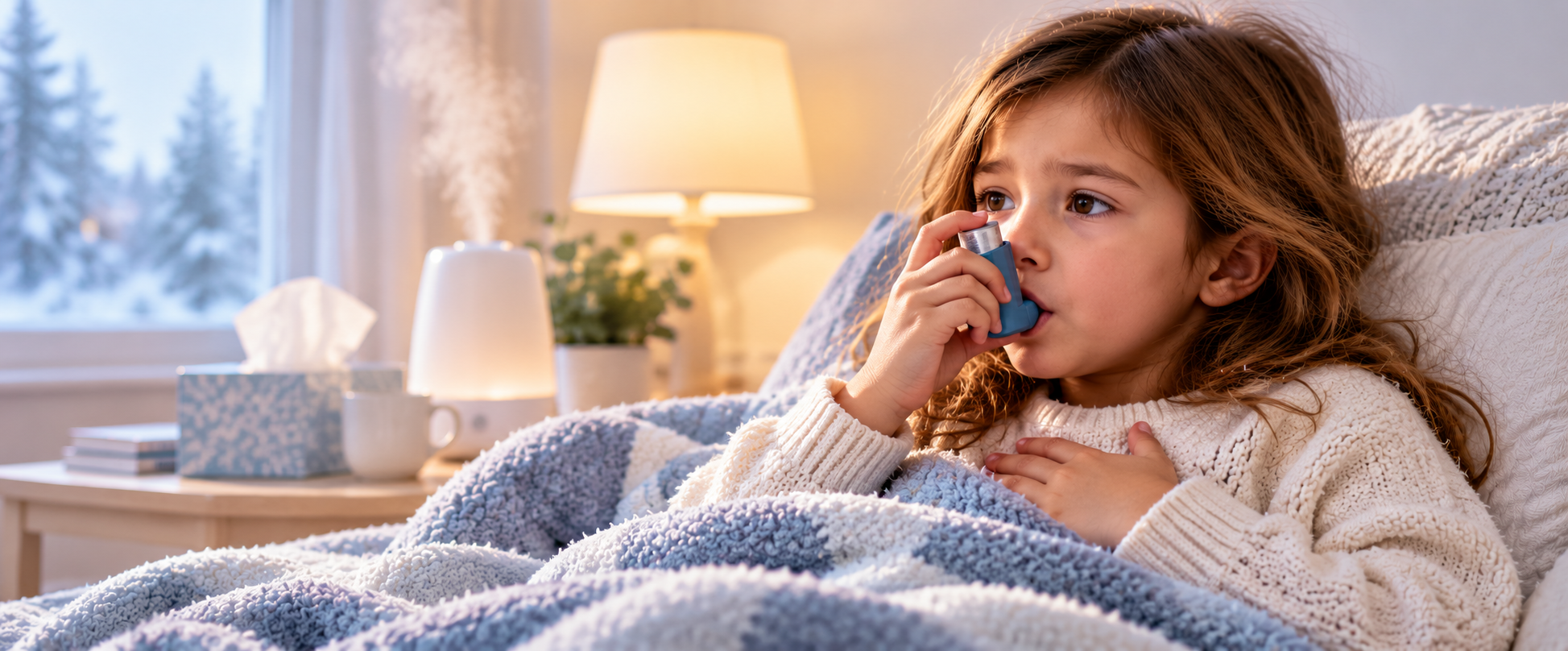
As the weather cools across Northwest Georgia and the heat kicks on indoors, the air gets drier, and children’s skin and lungs often feel it first. Chapped cheeks, itchy eczema flare-ups, and more frequent coughing or wheezing are all common this time of year. A few simple changes at home go a long way toward keeping your child comfortable through the winter.
This guide covers caring for dry winter skin and eczema and managing asthma triggers in the colder months. It is general health information, not a substitute for care from your child’s provider.
Dry skin and eczema in winter
Cold outdoor air and dry indoor heat pull moisture out of the skin, which can leave it rough, itchy, and more prone to eczema flare-ups. The goal is to lock moisture in.
- Moisturize often, and right after baths. Use a thick, fragrance-free cream or ointment, and apply it within a few minutes of bath time while the skin is still damp.
- Keep baths short and lukewarm. Hot water and long soaks dry the skin further. Pat dry gently rather than rubbing.
- Choose gentle, fragrance-free products. Mild soaps and detergents are easier on sensitive skin.
- Dress in soft layers. Soft cotton next to the skin is more comfortable than wool or scratchy fabrics, which can trigger itching.
- Add moisture to the air. A cool-mist humidifier in your child’s room can ease dry skin and stuffy noses.
If your child’s eczema is painful, weepy, or not improving with regular care, your pediatrician can help with a plan that works for your child’s skin.
Asthma and breathing in the colder months
Winter is tough on kids with asthma. Cold air, winter colds and flu, and more time indoors around dust and pet dander can all set off symptoms. A few steps help keep breathing easier.
- Know your child’s triggers. Common winter triggers include cold air, respiratory viruses, dust, pet dander, and smoke.
- Keep indoor air clean. Reduce dust, keep the home smoke-free, and change heating filters as recommended.
- Cover up outside. A scarf or mask over the nose and mouth warms cold air before it reaches the lungs on chilly days.
- Follow the asthma action plan. If your child has one, keep medicines on hand and use them as directed. If you do not have a plan, your pediatrician can help you build one.
Seek care right away if your child has:
- Trouble breathing, fast breathing, or working hard to breathe
- Wheezing that does not ease with their usual medicine
- Trouble speaking, eating, or sleeping because of breathing
- Lips or face that look bluish or gray, which means call 911
Talk it through with White's Pediatrics
Whether it is stubborn eczema or winter asthma, the pediatricians at White’s Pediatrics can help you build a plan that keeps your child comfortable. White’s has cared for Northwest Georgia families since 1981, with locations in Dalton, Chatsworth, and Calhoun.
Spanish-speaking staff are available at every location, and all major insurances are accepted, including Georgia Medicaid and PeachCare.
To talk about your child’s skin or breathing, call White’s Pediatrics at 706-876-2130 or visit whitespediatrics.com to schedule a visit in Dalton, Chatsworth, or Calhoun.
Frequently asked questions
Why does my child's eczema get worse in winter?
Cold outdoor air and dry indoor heat pull moisture from the skin, which triggers flare-ups. Frequent fragrance-free moisturizing, short lukewarm baths, and a humidifier all help.
What is the best way to moisturize dry skin?
Apply a thick, fragrance-free cream or ointment right after a lukewarm bath, while the skin is still damp, and reapply through the day as needed. This locks moisture in.
Why is my child's asthma worse in the cold?
Cold air, winter viruses, and more indoor time around dust and pet dander can all trigger asthma. Knowing your child’s triggers and following their asthma action plan helps.
Should my child wear a mask or scarf in the cold?
Covering the nose and mouth with a scarf or mask on cold days warms the air before it reaches the lungs, which can ease symptoms for children with asthma.
When should I call the doctor?
Call your pediatrician if eczema is painful or not improving, or if your child has trouble breathing or wheezing that does not ease with their usual medicine. For bluish lips or severe breathing trouble, call 911.
Comfortable skin and easy breathing make for a better winter. White’s Pediatrics serves Dalton, Chatsworth, and Calhoun. Call 706-876-2130 or visit whitespediatrics.com.
For an overview of the illnesses families see most often, visit our guide to common childhood illnesses.


